
Hippo Swimming 3D Model Animation

Hippo Swimming 3D Model Animation

The Wobo hippo, also known as the pygmy hippo, is a small hippopotamus in the Mammalian Hippoidae family. The body size is much smaller than that of ordinary hippopotamus. The adult weight is about 160 to 270kg, the body length is 1.5 to 1.75 meters, and the shoulder height is 75 to 83cm. The skin is thick and blackish brown to reddish purple, smooth and glabrous, with only a few hairs on the ends of the mouth, inside the ears, and on the tail. The head is round and short, the eyes and nostrils are born on the upper end of the face, and the webbing between the toes is not obvious, suitable for walking in the muddy rain forest. It mainly inhabits rainforests, swamps and streams in West Africa. It is a nocturnal animal that likes to move alone and feeds mainly on ferns, broad-leaved plants and fruits.
Japanese giant salamander 3D animation model

Japanese giant salamander 3D animation model

The Japanese giant salamander, also known as the big mountain pepper fish, is one of the largest amphibians in the world, second only to the Chinese giant salamander. It is mainly distributed in mountainous rivers in southern Honshu Island, Shikoku and northern Kyushu, Japan, and inhabits cold, turbulent, and high-oxygen alpine freshwater streams and rivers. The body shape is flat and long. The skin is brownish with black spots, the head is broad, and the eyes are small and degenerate, almost hidden in folds of skin. It is a nocturnal animal that hides under rocks or in caves during the day and comes out at night to prey on fish, salamanders, worms, insects and snails. It has been listed in the red list of endangered species, and its protection status is near danger.
Giant Sand Kat 3D animation model

Giant Sand Kat 3D animation model

The giant sand is a giant insect living in New Zealand, belonging to the family Orthoptera. It is one of the largest insects known at present, with an adult body length of 8-10cm and a weight of up to 80g. It has barely evolved in nearly 0.2 billion years, and its shape and features have been preserved to this day. It lives mainly on Little Barrier Island in New Zealand and several isolated islands around it. Due to the lack of large predators on these islands, they were able to evolve into huge body sizes. It is a nocturnal insect that feeds on plants, small insects and fruits. Although large, but generally do not take the initiative to attack humans, only when threatened to defend themselves
Turtle Model 3D Animation

Turtle Model 3D Animation

It is a type of reptile that lives in the ocean, belonging to the order Turtles and family Turtles. Distributed in tropical and subtropical waters around the world, it feeds on seagrass, jellyfish, mollusks, and crustaceans. Long lifespan, some individuals can live to over 100 years old. The body is streamlined and the limbs have evolved into paddle shaped fins, making it very suitable for swimming in water. The shell is divided into the carapace and the plastron, with the carapace being their main protective structure and the plastron providing stability during swimming. The breeding method is special. Females will build nests and lay eggs on the beach, then bury the eggs in the sand and rely on the heat of the sun to naturally hatch. Many species are listed as endangered.
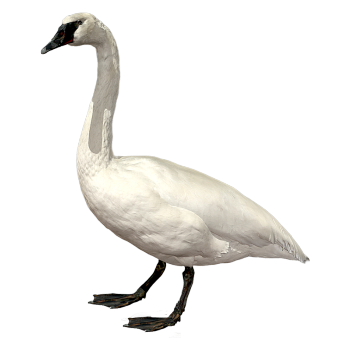
Black billed swan specimen

Black billed swan specimen

The black billed swan, also known as the trumpet swan, is the largest native waterfowl in North America and is named after its unique horn like call. The body length is usually between 138 and 165 centimeters, the wingspan can reach 185 to 304.8 centimeters, and the weight is between 7 and 13.6 kilograms. They are the heaviest flying birds in North America. Due to overfishing and habitat loss, the population sharply declined in the early 20th century. By implementing protective measures and reintroducing the project, the population has now recovered to some extent
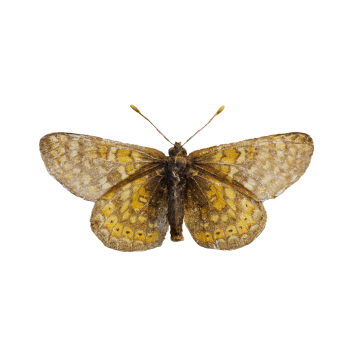
Swamp shell butterfly specimen

Swamp shell butterfly specimen

It is a butterfly distributed in Europe, especially in the UK, Ireland, and some Nordic countries. Named after their habitat in moist grasslands and marshy areas, they are highly dependent on these specific habitats. Wings usually appear orange and black, and the back of male butterflies' wings has a blue sheen. Larvae feed on specific plants, which is crucial for their survival. Therefore, the distribution of marsh shell butterflies is limited by the habitat of their host plants. Progress has been made in the conservation of marsh mother butterflies in some areas, such as increasing their population through the implementation of specific conservation projects and habitat restoration plans.
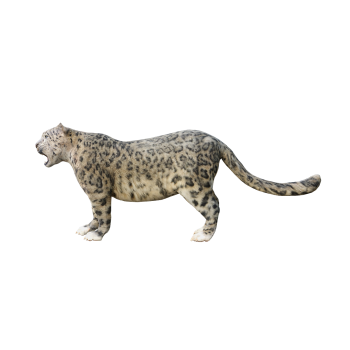
Snow leopard (cub) 3D model with animation

Snow leopard (cub) 3D model with animation

The cubs of snow leopards are the starting stage of the life cycle of this rare feline species. Mainly distributed in the high mountain areas of Central Asia, known for its unique gray white fur and black spots, it is the top predator in the ecosystem of the region. It is covered with a thick layer of fur to resist the cold mountain climate. The eyes begin to open around 10 days, and by two months of age, the spots and fur color of the cubs are very similar to those of adult snow leopards. During the first few months of life, one relies entirely on their mother's milk for survival. As they grow, the mother leopard will start taking them out and teaching them hunting skills. Listed as an endangered species.
3D Animation Model of Saiga Antelope

3D Animation Model of Saiga Antelope

It is a hoofed animal that lives on the Eurasian grasslands and belongs to the family Oxidae. Known for its unique, donkey like facial features and nose, which is particularly large and helps filter dust and regulate body temperature. Medium size, with dark brown fur in winter and light gray fur in summer. The horns are short and straight, with males having more prominent horns than females. Mainly inhabiting grasslands, semi deserts, and desert areas, feeding on herbaceous plants. It is a social animal that sometimes forms large groups of hundreds or even thousands of individuals. Migration routes and breeding habits have significant impacts on ecosystems. The quantity once sharply declined and was listed as an endangered species.
Panda (with 3D animated model)

Panda (with 3D animated model)

It is an arboreal mammal distributed from the eastern the Himalayas to the southwest of China. Known for its reddish brown fur, fluffy long tail, and round cheeks, it shares similarities with giant pandas in appearance but is smaller in size. The tail is very prominent, with a length of more than half of the body length, and has circular dark stripes. There is thick hair on the soles of the feet, which is suitable for walking on tree trunks and rocks. Mainly active at night, primarily consuming plant-based foods, especially bamboo, but also preying on insects, bird eggs, and other small animals. Their diet is relatively monotonous and they have a high dependence on bamboo. Currently listed as an endangered species.
Snow leopard cub (with 3D animated model)

Snow leopard cub (with 3D animated model)

It is a large feline species living in high mountain areas of Asia, known for its unique blue gray fur and black spots and rose patterns covering its entire body. It is a disguise in cold mountainous environments. It is mainly distributed in the Himalayas, Karakoram, Hengduan Mountains, Tianshan Mountains and Mongolian Plateau. He is a lonely hunter who feeds on rock sheep, blue sheep, rabbits, and birds. Known for its excellent climbing ability and agile movements in steep terrain. Having thick fur, wide feet, and a long tail, these features help keep warm and maintain balance in cold mountain environments. Currently listed as an endangered species.
Danube Zhe Luo Fish 3D Model with Animation

Danube Zhe Luo Fish 3D Model with Animation

It is a precious freshwater fish that lives in the Danube River basin and its tributaries. Belonging to the Salmonidae family, it is known for its enormous size and unique ecological habits. The body is slender, with a silver gray color and dark markings that help camouflage in rocks and sediments in rivers. The head is large and has sharp teeth, adapted to the predatory habits of fish and other aquatic animals as the main food. It is an important member of the Danube River Basin ecosystem and plays a crucial role in maintaining ecological balance. Currently listed as an endangered species. It is a natural heritage of the Danube River Basin and a focus of attention for fishing enthusiasts and nature conservationists.
Alexander Islands Wolf 3D Animation Model

Alexander Islands Wolf 3D Animation Model

It is a subspecies of gray wolf, belonging to the upper predator in the food chain, usually acting in groups. Living in the forests, mountains, cold grasslands, coniferous forests, and grasslands at the southeastern end of Alaska, it is the smallest wolf among all wolves in North America. Has good endurance and is suitable for long-distance migration. Narrow chest, strong and powerful back and legs, giving them efficient mobility. It can walk more than ten kilometers at a speed of about 10 kilometers per hour, increase its speed to nearly 65 kilometers per hour when chasing prey, and cover a distance of up to 5 meters per step during sprinting. Due to their ability to prey on livestock such as sheep, they were extensively hunted and killed by humans until the late 20th century.
African elephant (with 3D animated model)

African elephant (with 3D animated model)

It is the largest land mammal in the world, known for its large body size and unique large ears. Weight can reach over 6 tons, and shoulder height is usually between 2.5 and 4 meters. Having a long nose is an important tool for them to feed, breathe, and interact socially. It is a herbivorous animal that mainly feeds on grass, leaves, fruits, and branches. It is necessary to consume a large amount of food every day to maintain its huge energy demand. Long noses and big ears not only help them dissipate heat in the hot African climate, but also serve as a way for them to communicate and express emotions. They are highly socialized animals.
3D model of mountain zebra with animation

3D model of mountain zebra with animation

It is a subspecies of zebra, mainly distributed in the southern regions of Africa, especially in the mountainous areas of Namibia and Ethiopia. Compared to plain zebras, mountain zebras have a smaller body size, tighter and narrower stripes. The habitat is mainly high-altitude mountainous grasslands, adapted to life in rugged terrain. It is a herbivorous animal that feeds on various herbaceous plants and sometimes also consumes shrubs and leaves. Due to living in high-altitude areas, it can withstand lower temperatures and larger day night temperature differences. The social structure is typically a small group led by a male, including several females and their offspring.
3D model animation of green sea turtle adsorbed by catfish
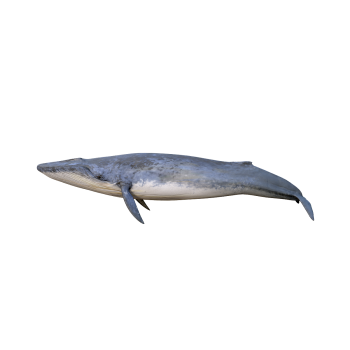
3D model animation of green sea turtle adsorbed by catfish

It is a large sea turtle in the family Turtles. Widely distributed in tropical and subtropical waters around the world, it is named after its unique green fat layer. Large in size, adult individuals typically weigh 100 to 150 kilograms and can have a shell length of about 1 meter. Having flat limbs, adapted to swimming life in water. It is a herbivorous animal that mainly feeds on seagrass, and sometimes also consumes aquatic plants and algae. Living habits include long-term migration, especially females returning to their birthplace to lay eggs during the breeding season. The breeding process is very special. Females will dig caves on the beach to lay eggs, and then leave to let the eggs hatch naturally. Currently listed as an endangered species
Blue Whale (with 3D animated model)

Blue Whale (with 3D animated model)

It is the largest known animal on Earth, belonging to the whale order, baleen whale family, and has a gentle personality. Known for its enormous size, adult blue whales can grow up to 25 to 30 meters in length and weigh around 200 tons. The body color is usually deep blue or gray, with a lighter belly. Having a huge head and wide jaw, as well as a U-shaped mouth, it can filter and feed on large amounts of krill and other small marine organisms. They have a wide distribution range and can be found in oceans from the Arctic to the Antarctic, but they prefer colder waters. It is a mammal that needs to regularly float and breathe, and its huge jet holes can spray up to 12 meters of water column.
Galapagos Turtle 3D Animation Model

Galapagos Turtle 3D Animation Model

It is a large land turtle living on the Galapagos Islands in Ecuador, belonging to the family Turtles. It is one of the largest surviving turtles in the world, with an adult body weight of up to 300 kilograms and a lifespan of over 150 years. Known for its massive size and slow movement speed, its carapace is dome shaped or saddle shaped, adapting to different ecological environments on the island. The significant differences in body shape and living habits among different islands in the archipelago are important evidence for Darwin's theory of evolution. Mainly feeds on plants, including herbaceous plants, leaves, and cacti. Currently listed as an endangered species and protected by international conservation organizations.
Madagascar Land Turtle 3D Model Animation

Madagascar Land Turtle 3D Model Animation

It is an endemic species only found on the island of Madagascar. The body is large, with an adult's shell length of up to 90 centimeters and a weight of up to 130 kilograms. The shell is dark brown or black with yellow or orange markings on it. The head and limbs are usually gray or yellow. It is a herbivorous animal that mainly feeds on leaves, herbaceous plants, and fruits. Living in the tropical rainforests and swamps of Madagascar, these areas provide abundant food sources and suitable habitats. The slow reproduction rate and relatively low survival rate of young turtles make population recovery more difficult. Currently listed as critically endangered species.
Rhinoceros 3D Animation Model

Rhinoceros 3D Animation Model

It is a large mammal with a long history, belonging to the family Rhinoceros in the order Rhinoceros. Known for its powerful physique, short and thick limbs, thick skin, and prominent horns. Mainly distributed in tropical and subtropical regions of Asia and Africa, there are currently 4 genera and 5 species of rhinoceros family. It is a herbivorous animal that feeds on small shrubs and herbaceous plants, and inhabits open grasslands, savannas, shrublands, or swamps. Rhinos face serious survival threats, mainly due to habitat loss and illegal poaching caused by human activities. All species of rhinoceros have been listed on the IUCN Red List of Threatened Species, and the work of protecting rhinoceros is urgent.
Green Turtle 3D Model Animation

Green Turtle 3D Model Animation

It is a relatively large sea turtle belonging to the family Turtles. Widely distributed in tropical and subtropical seas worldwide. The name comes from the color of its fat layer, not its outer shell, which is usually olive or brown, while the fat layer is green. It is a herbivorous animal that mainly feeds on seagrass, and sometimes also consumes aquatic plants and algae. Known for its long-distance migration, it swims from foraging grounds to breeding grounds, sometimes covering distances of thousands of kilometers. The breeding cycle usually takes place at night, and females dig holes on the beach to lay eggs, then cover and leave, allowing the heat of the sun to naturally hatch.
Turtle (cub) 3D model animation

Turtle (cub) 3D model animation

It is a larger species in the family Turtles. Widely distributed in warm waters around the world, it mainly feeds on seagrass and seaweed, and occasionally consumes jellyfish and mollusks. The shell is elliptical in shape, with colors ranging from olive green to dark brown. The scales on the shell are arranged neatly, providing excellent protection. The lifespan is relatively long, generally reaching around 80 years old. The breeding season usually occurs in summer, and females return to their place of birth to lay eggs, with each egg laying up to a hundred or more. Due to overfishing and habitat destruction, green sea turtles are currently listed as endangered species and require more protection measures.
White Rhinoceros (Male) 3D Model Animation

White Rhinoceros (Male) 3D Model Animation

It is the largest existing species of rhinoceros, mainly distributed in southern Africa. It is divided into two subspecies: the southern white rhinoceros and the extinct northern white rhinoceros. The southern white rhinoceros has a larger population, while the northern white rhinoceros died in 2018 due to excessive hunting and habitat loss, marking its functional extinction. Large in size, adult individuals can weigh up to 2.5 tons and grow up to 4.5 meters in length. Having strong limbs and thick skin, with almost no hair on the skin, helps them dissipate heat on the hot African grasslands. Poor vision, but very sensitive sense of smell and hearing, able to detect distant threats and food
Blue Whale (with 3D animated model)

Blue Whale (with 3D animated model)

It is currently the largest known animal on Earth and belongs to the family of baleen whales. Known for its enormous size and length of 25 to 33 meters, it can weigh up to 150000 to 180000 kilograms. The streamlined body helps them swim quickly in water. The skin appears light blue or mouse gray, with markings on the back and wrinkles and yellow spots on the abdomen. They don't have teeth, but instead have whiskers to filter food, mainly feeding on krill. Blue whales are distributed in the oceans around the world, especially in the Antarctic region where they are most abundant. It is an endangered species that is under international protection and hunting is prohibited. Blue whales have a long reproductive cycle, giving birth every 2 years.
Frog shaped ceramic container

Frog shaped ceramic container

This frog shaped container has its body carved into a crouching posture, with a handle and water outlet on its back. Decorated with black, yellow, brown, and red paint, with horizontal black lines on the surface to represent the rough skin of frogs. The dots on the back and chin may represent the markings of the Marangon Poison Frog, named after the toxic chemicals it secretes as weapons against predators. The strong substance secreted by Poison Arrow Frog has also been used as medicine. Usually lives in rainforests, near rivers and lakes. Due to the destruction of its natural habitat, the Malan Weng Poison Frog is considered an endangered species.
1 2 Next